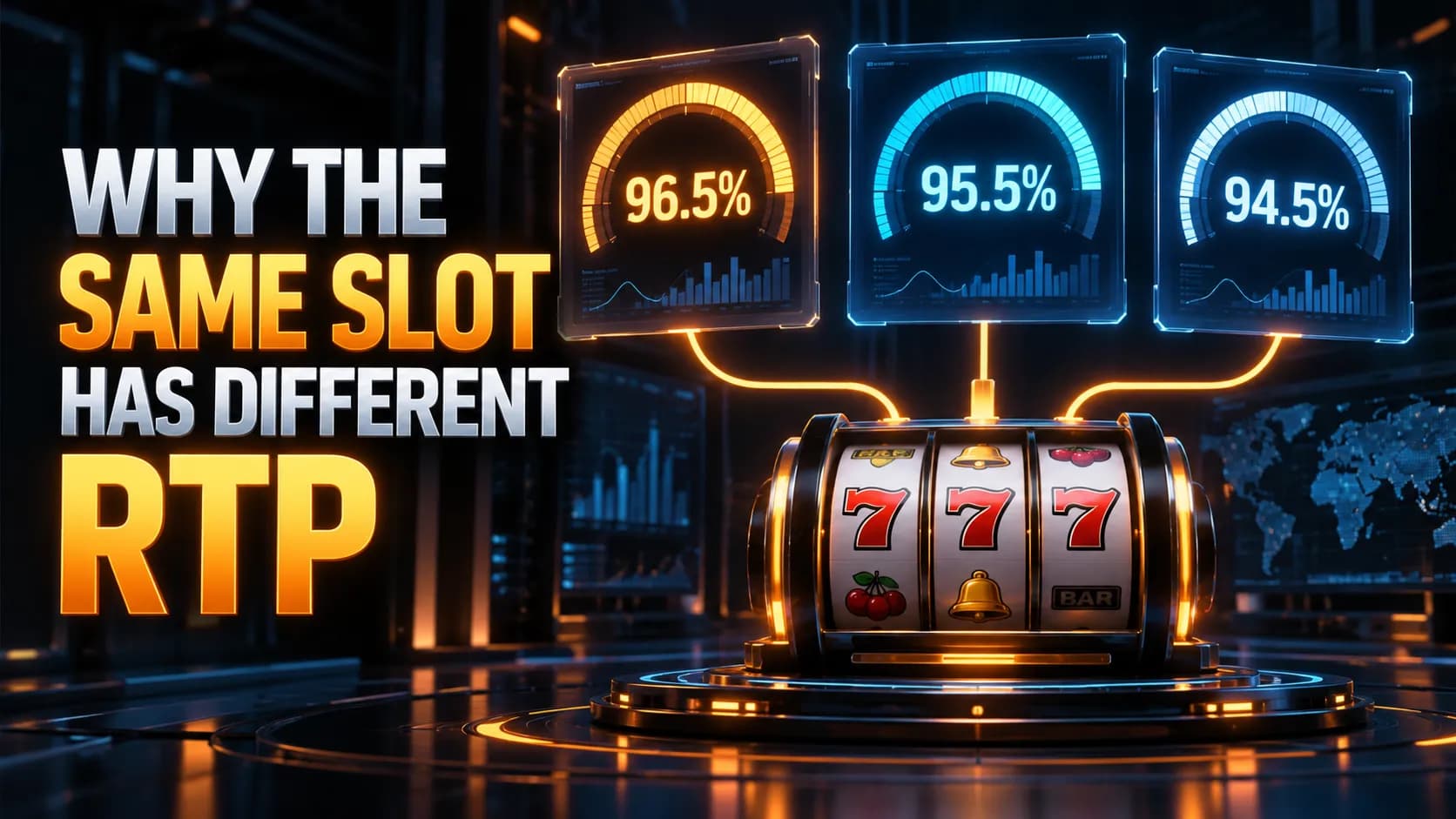
Players sometimes open a slot at one casino and see a different RTP from the percentage listed in a review, provider document or another operator’s game.
That difference can be legitimate.
Some providers supply the same title in multiple approved return-to-player configurations. The artwork, title and major features may remain unchanged while the underlying payout settings differ. An operator may select one of those configurations where its market, platform and local rules permit it.
This is why a responsible slot review should identify its RTP source and remind readers to check the exact game version available to them.
RTP is the theoretical percentage of total wagers that a game’s mathematical model returns across an extremely large number of rounds.
A 96% RTP does not mean every player receives $96 back from every $100 session. Individual sessions can finish far above or below the theoretical percentage because the calculation applies over a sample much larger than one person’s play.
For a complete introduction, read what RTP means and how to find high-RTP slots.
A provider may certify several mathematical configurations for one title. These can allow operators to choose a version suited to their commercial model or regulated market.
The available percentages vary by provider and game. A title might have one reference configuration plus one or more lower-return alternatives. Not every operator receives or uses every available option.
The configuration should still be disclosed inside the game’s information or help section. It is not supposed to change secretly from spin to spin.
The visible game can look identical even when the theoretical return differs.
Depending on the provider’s math model, a configuration change may affect the distribution assigned to:
The exact implementation is provider-specific. Players should not assume that a lower percentage simply removes the difference evenly from every type of result.
Several visible elements may remain consistent across configurations:
That visual consistency is why two users can believe they are discussing the same game while seeing different RTP values.
Use the information inside the game rather than relying only on the casino lobby card.
The usual process is:
Menu names differ by provider. If the information is not visible or understandable, contact the operator before wagering.
Screenshots can help document the version seen at a particular time, but casino offerings and configurations may later change.
A review may use:
The casino may offer another approved version or may have changed configurations after publication. The review may also be outdated or incorrect.
The most useful review states where the number came from and when it was checked. SlotEssentials can display a verified base or reference figure while advising users to confirm the in-game value for their exact version.
SlotEssentials may display more than one return-related figure, and the labels must remain clear.
Base RTP is the theoretical value associated with the game configuration or verified source.
Daily or weekly tracked return is observational platform or user-session data collected over a defined period. It can move above or below the theoretical RTP, especially when the sample is small.
Tracked return does not replace the certified or published RTP. It describes what happened in the tracked sample, not what the game guarantees next.
This separation is essential for transparency. Our guide to daily versus weekly RTP trends explains when short-term data is informative and when it can be misleading.
A lower or higher approved RTP configuration is part of the game’s mathematical setup. It is not the same as a slot becoming hot, cold, ready to pay or due for a bonus.
Short-term results naturally vary. A game can return far more or far less than its theoretical percentage during a limited session without changing configurations.
Previous spins do not determine the next random outcome. Read how slot RNG works for more detail.
No.
A higher theoretical RTP may reduce the mathematical house advantage over a very large sample, but it does not make a short session predictable. Volatility, hit frequency, feature frequency and bet size all influence the experience.
Two games with the same RTP can behave very differently. One may produce more frequent small wins, while another concentrates more of its potential in rare bonus outcomes.
Use the RTP, hit frequency and volatility comparison to understand the distinction.
An accurate slot page should:
When the available information is uncertain, transparent wording is more useful than false precision.
Players can browse the SlotEssentials slot database and compare available game specifications, providers, mechanics and release dates.
Yes. Some providers certify multiple RTP configurations for one title, and different operators may use different approved versions where permitted.
An approved configuration is not a per-spin control or a hot-and-cold switch. Any operator or provider changes must follow the platform’s technical and regulatory processes. Check the information panel for the version currently offered.
Not necessarily. The operator may choose from the configurations available to it. Confirm the exact percentage inside the game.
No. Base RTP is a theoretical game value. Daily tracked return is an observed result from a limited sample and may vary significantly.
No. RTP is a long-run theoretical measure and cannot predict the result of an individual spin or session.
Slot outcomes are random and no RTP figure or tracking method can guarantee a win. Play only where legal, set firm limits and never chase losses. 18+.
